Audience concept affords a beginning factor for many Media Studies tasks. Whether you are setting up a textual content or examining one, the destination of the text desires to be considered in terms of the goal audience and how that target market will reply to that text. This can affect the genuine text thats being produced as greater concerns will be raised over the interpretation via the audience. This is referred to as the limited results paradigm. There are several theories that can be used to deconstruct the relationship between the target audience and the text. One is The Hypodermic Needle Model Dating from the Twenties and tries to explain how mass audiences may react to mass media. It suggests that the statistics from a text passes into the audience unmediated and that the opinion of the target market isn’t relevant to the reception of the text. A media text in itself has no meaning till it is examine or decoded through an audience as the target audience is the spark for the reception of the textual content and determines how influential and essential the textual content truly is. Over the previous century, media analysts have developed quite a few outcomes fashions that attempt to interpret and apprehend how mass men and women and target audiences react and take in the text that is being presented to them and this allows them to have a better perception of how to attraction to an audience.
The human thinking wishes narrative to make sense of matters when viewing a film or a text. The narrative is the coherence or the business enterprise given to a sequence of records in a text. We understand and assemble that means the use of our trip of truth and of previous texts. In order to make a narrative, we have understand the purpose of the textual content and then make an interpretation based totally on that. The narrative is the improvement of a story, the roles and relationships of characters inside it, the conditions and dilemmas they confront and overall. It is actually the spine to the which means and the plot of a film and offers the target audience an appreciation of what is really going on and additionally lets in the target audience to relate to the story and immerse themselves in the story. The codes and conventions virtually come into play when appreciation the narrative of a movie and the conventions for genre, character, structure and time want to be analyzed to help us understand the narrative.
Tvzestan Todorov used to be a French-Bulgarian literary critic that was necessary to creating the narrative concept of motion pictures and developed his own thinking as to what a traditional narrative must consist of. He divided it into five degrees and is understand as the Todorov theory. The first is equilibrium where all is nicely in the film. The second is disequilibrium the place the trouble is introduced and the calm and serenity in the film is gone. The 1/3 is the acknowledgement of the problem and the practice to solve or fight. The fourth is the solving of the problem. The fifth is the restoration of equilibrium and the original state of the film is restored.
By definition, all media texts are a re-presentation of truth which skill that they are written, produced, composed, branded and centered through their makers and that they are a definitely synthetic assemble of the what the world round us clearly is and truth itself. Representation also has a lot to do with the portrayal of types of people and communities from the producers of the film or text. There is a spark of debate in the world about the mis-representation and under-representation of minorities in the film and media industry and how humans of disability, different age, gender and bodytypes are stereotyped into believing that they are no longer capable to play a certainposition in a film or media text.
The importance of illustration is great. Strong and advantageous representations can assist battle and spoil down poor stereotypes that can be harmful to folks and limiting to society. Representation can alsohelp to encourage folks who can relate to the representations portrayed in positive motion picturesby way of actors. This boosts self esteem and confidence in viewers of the film and helps them out tremendously.
Representation also allows for new opportunities in the acting and film industry as it can lead to more diverse, richer and complicated testimonies that enable for exclusive and greater abundant story strain that can pertain to an actor that is a minority and not white. Representation additionally allows for new views on matters and new voices on frequent topics .
The dilemma of whether to star a male or a female in a film or media text has been prominent ever since the film industry had started and the choice of a male or female actor can greatly affect the outcome and plot of the film. This choice also influences the representation of the film and other key components that affect the overall influence and meaning of the film. The topic has been in debate for quite some time and in recent times, the choice of putting female actors in films have skyrocketed and the representation of women in the film industry has increased. Some notable examples are Orange Is The New Black and Sex in the City. Both of these films greatly bolster the meaning of being powerful women living in their own world and breaking the stereotype that women need men in order to survive and be strong.
Feminism has had a great influence on Western society for the past 40 years and the idea that women are strong and independent beings that can live very comfortably by themselves has been a main focus of the movement. However, in media studies, women are typically defined as adopting some characteristics in film and in life. In media studies, representations of women include their beauty, size/physique, sexuality, emotional dealings and relationships. These are typically the characteristics taken on by women in movies by their producers to adhere with what the society portrays women.
The role of men and masculinity has clearly been dominant in the film industry since it started and there is no debate to that. The stereotypes that the men have to adopt in the films are also more rigid and more demanding to appeal to a specific target audience for a film. These include strength, power, physique, sexual attractiveness and the ability to be independent in choices and life. This also comes back to the question of representation with women as both genders have to fit in to certain stereotypes in order to carry out or even be offered a role for the film.
The representation of both genders in film are often questioned as men and women who don’t have the typical characteristics of usual women and men in film roles are often left out of being in the movie. Since they don’t adopt the typical stereotypes, they are often left out of being given a role due to the producer’s fear that it may face negative feedback from a target audience and viewers of the film in general.
When viewing an actor in a film, one of the first matters that the audience can depict about them is their age. They can be young as an infant, they can be an adolescent, they can be middle aged or they can be old. Whatever age they are, it has an effect on the plot of the film and the reception that it gets from the target audience that the movie was once initially meant for. There are representations that come into play when discussing age in movie such as whether or not an older character would be in a position to fulfill a positive type of role or whether or not a young individual would be in a position to fulfill a role which requires deep intellect and the knowledge of an older person. It is apparent that you wouldn’t see an 80 year historical performing a James Bond movie the place he is swinging from structures and doing double backflips off a cliff. If that had been the case, the film would truly no longer make sense and the reception would be greater poor than positive.
When inspecting the age of an actor in a film, human beings usually have a tendency to contact up on certain stereotypes. These stereotypes also change between genders as well. An older man would most likely be extra mature and expected to have a deep know-how of his surroundings as he has been alive for a lengthy time and he has won an abundance of ride along his way. An older girl would be expected to act extra for this reason in events and additionally have a deep, knowledgeable and comprehensive perception of the world as she too has had much experience. This influences the producer’s choices when figuring out an actor due to the fact if he wishes to do a movie such as the Godfather, then an older man who can be match to play a mafia boss would be the right course to choose. On the different hand if a producer desired to make a film such as Back to the Future and change a younger actor with an historical actor, it wouldn’t make feel and would disrupt the intentions and which means of the film.With all sorts of representation in media, there will continually be stereotypes whether its some thing that you can’t change such as age or race or something that human beings will go to incredible lengths to obtain such as body picture or sexuality. Age is just a quantity that has a lasting effect on in the movie industry as it can finally determine whether or not anyone receives the position in a movie or not.
Racial stereotypes are regularly based on social fantasy that have been influenced and changed as they have handed down through the years. A lot of movie are responsible of lazily developing nonsensical stereotypes. The stereotypes that come with race are regularly comparable to the ones that are associated with he portrayal of gender and its elements. Race, ethnicity and gender are all biologically assigned and can’t be changed. The way we characterize these things, however, can be controversial and can purpose the incorrect type of drama if it is offensive to a positive group of individuals. Stereotyping on race can have a tendency to increase greater ethical problems and cause more controversy than different stereotyping. In recent times, the controversy of media portrayal of matters like race have been rising as it tends to be dangerous and many humans get offended.
The representation of African Americans tend to be the ones that purpose more controversy as they are seen as a minority. But, the stereotypes such as the idea that African Americans can’t be profitable in the film industry have been shattered with stellar performances by way of black actors such as Denzel Washington, Will Smith, Halle Berry, Morgan Freeman and Keke Palmer. These actors have damaged the stereotypes and have blown them out of the water and in fact proved every doubter wrong. This is very vital for the illustration of African Americans as properly as it can show to people that they can make it massive industries and that they are effective humans with masses of potential.
The producers face a typical quandary while choosing the actors for a film because they subsequently have to pick out the entirety about the actor and that includes race. It is impossible to make each audience member joyful as some humans will get mad if it is a white actor and some will get mad if it is an African American actor. The choice of what race the actor is is a tough one and has to be chosen with the anticipated remarks after the movie. People will have one of a kind views as to why the positive choice is made and people will say it has a lot to do with representation and some human beings would say that it is simple racist. Ultimately, it is what we choose to interpret it as.
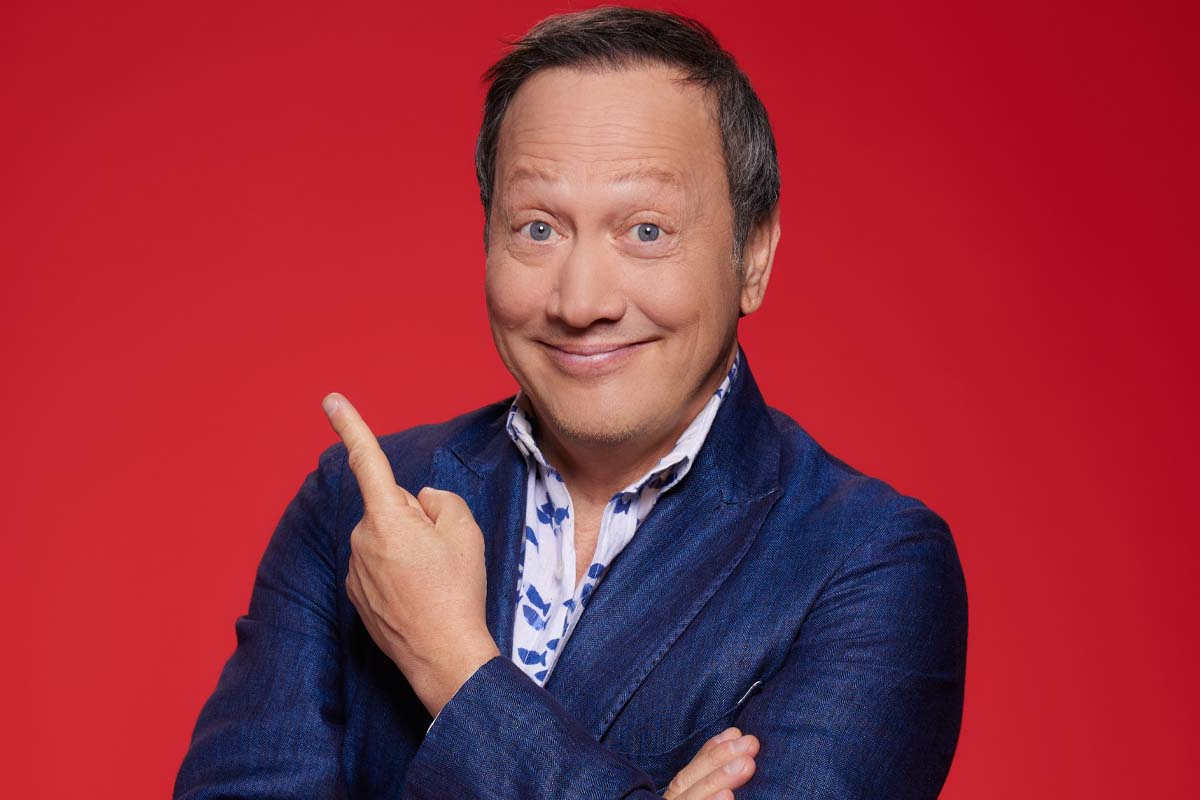
Born in San Fransisco, California, to a family of three, growing up in the city for most of his formative years. At a young age, Schneider was inspired by such comedians as Cheech and Chong, Richard Pryor, and John Belushi. His ambitions to be a comedian were very high, which led him to become a stage player in the comedy act “Saturday Night Live”. Between 1990 and 1994, he thrived on being one of the highly appraised comedy players on the show, which eventually led him to star in movies. He starred in a series of films in the mid 1990’s which include titles such as “Down Periscope”, “Judge Dredd”, “Demolition Man”, “Surf Ninjas”, and “The Beverly Hillbillies”. He had a series of his own lead roles in movies such as “The Hot Chick”, “Deuce Bigalow, Male Gigolo”, “The Animal”, and “The Benchwarmers”. He also acts alongside Adam Sandler in his previous Movies. He still currently works in comedic films, and stars in minor roles on tv shows.
Biography: Harrison was born in Chicago Illinois, and grew up most of his childhood there. In 1964 He moved to Los Angeles in hopes of becoming a successful actor. He got his first role as a bell hop in the movie “Dead Heat on the Merry-Go-Round”. It wouldn’t be until 1973, when Harrison starred as the main antagonist in the smash hit motion picture “American Graffiti”. This would be the first time that Harrison would work with director George Lucas on a motion picture. These minor roles would eventually lead to success, as Harrison started getting more mainstream roles. His big debut that put Harrison on the map would be his potryal of character Han Solo in the Blockbuster hit of 1977, “Star Wars”. This role would land him other films such as “Raiders of the Lost Ark”, “The Fiugitive”, and “Blade Runner”. He currently has one of the highest box office draws of any actor, at over 4.9 billion dollars, and still works on movies to this day. His latest film “Call of the Wild”, is set to be released February 21, 2020.
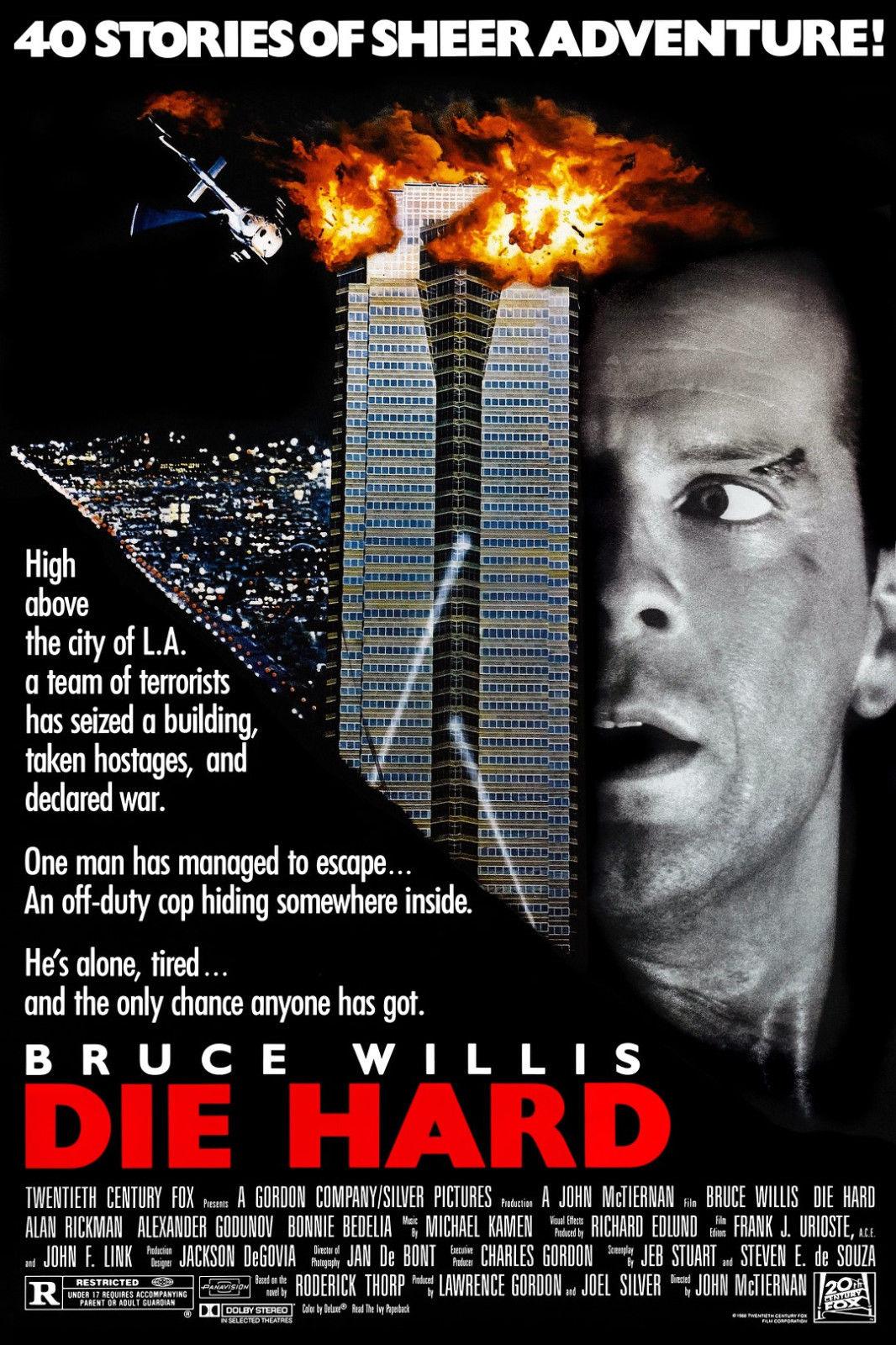
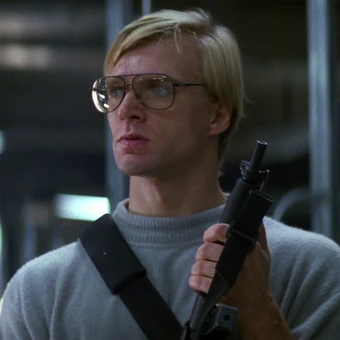
John McClane, a wisecracking New York City cop, comes to LA for Christmas. His wife, Holly, has recently taken an executive job there; she took the kids with her, too. McClane begrudges Holly packing up like that, but he loves her and hopes to work things out. Wandering through the company holiday party in the sleek new high-rise, Nakatomi Plaza, McClane feels out of place and things aren’t going that well with Holly either. It gets a lot worse when a band of European terrorists invade the building. Led by the suave and brilliant Hans Gruber, they’re seriously armed and organized. They lock down the building, seize control of the computer system, cut off all outside communication. The terrorists gather the only people left in the building, those attending the party, and keep them docile with their automatic weapons. Gruber is in total control. Except over McClane. Who has slipped into a stairwell unseen. Gruber escorts the head of the company, Mr. Takagi, into an office and demands a computer code that will unlock a vault containing 640 million dollars worth of bonds. Takagi refuses. Gruber blows his head off. Nearby in hiding, McClane watches. He realizes Gruber is fully capable of killing the hostages—including his wife. Armed with only his wits, McClane is the only one with a shot at saving the day. Hans has his tech specialist set about breaking the computer code, a complex routine that requires going through seven computerized locks. McClane tries to alert authorities by tripping a fire alarm, but the ruse fails, only signaling to Hans that there’s a rogue loose in the building. Climbing through air-ducts, sliding down elevator shafts, McClane manages to evade capture and even kills a few terrorists along the way. He finally catches the outside world’s attention by sending a dead body hurtling onto a squad car. The LAPD shows up. And the FBI. And the media. It’s a circus out there. But the terrorists keep them all at bay with missiles. Gruber still controls the building. One by one, the tech guy opens the locks. McClane manages to stay free and slow them down, but he’s still operating solo—injured, bleeding, running out of steam. Finally the bad guys open the vault and seize the wealth of bonds. How will they make their getaway? As they herd the hostages to the roof, McClane realizes they’ll unleash a massive explosion that kills the hostages and seemingly kills the terrorists, too. In the mayhem, they’ll escape. Good plan, but McClane clears the hostages, seconds before the rooftop erupts in flames. But now Gruber has seized Holly, to prevent McClane from impeding his getaway. McClane doesn’t like people messing with his wife. He sends Hans out a thirty-story window. But Hans grabs Holly’s wrist, pulling her, trying to yank himself back inside. McClane releases the latch on Holly’s Rolex. Hans plummets to his death. Game’s over. McClane and Holly have never been happier to be together.
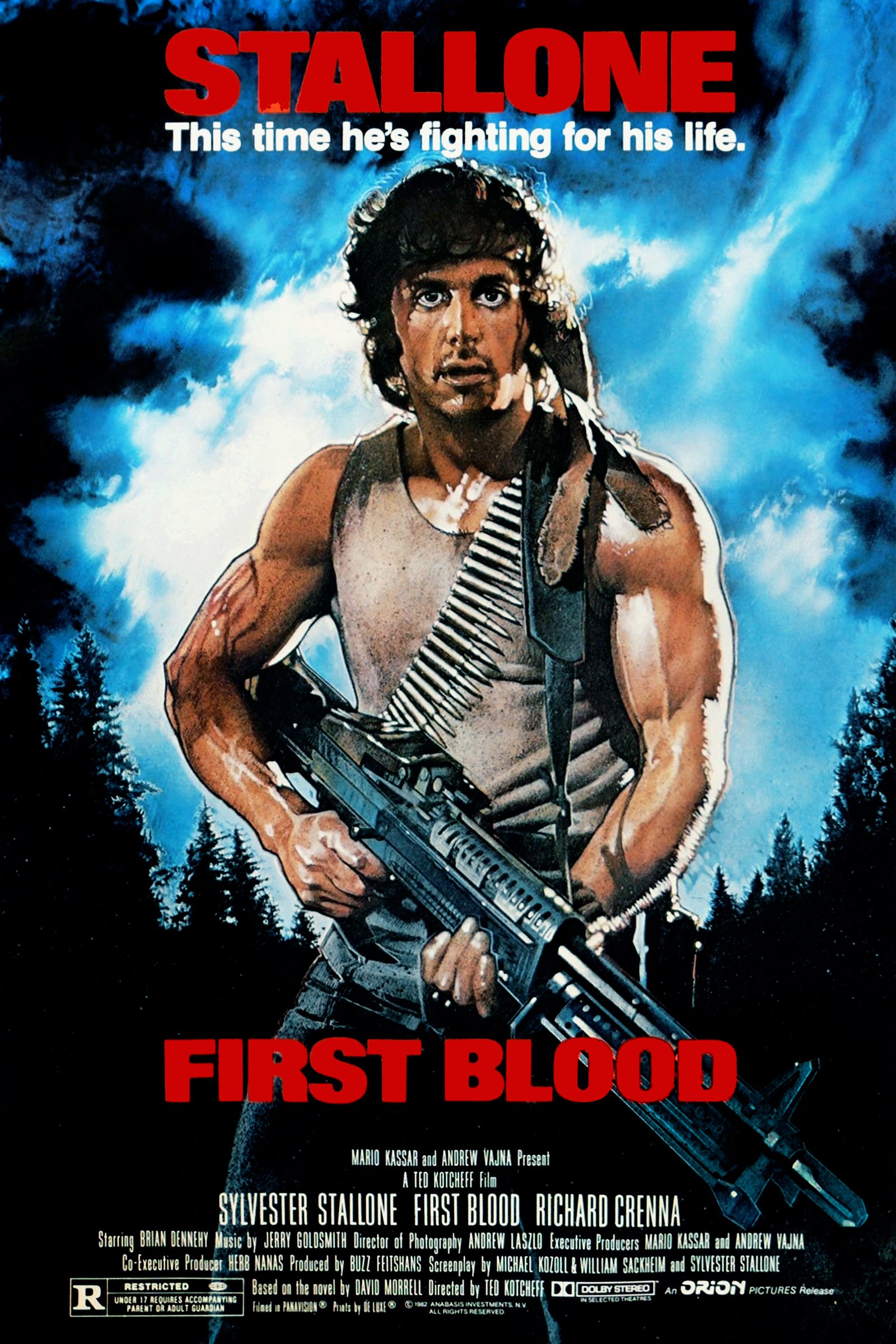
John Rambo is a former member of an elite United States Army Special Forces unit and was awarded the Medal of Honor for his service in the Vietnam War in which he was also a prisoner of war (POW). The film begins 10 years after Rambo left the war, in the American Northwest in 1980. Rambo is searching for one of his friends from his unit, Delmar Berry. Rambo soon learns from Delmar’s mother that he has died a few months earlier from cancer due to Agent Orange exposure. Although not yet revealed to the audience, Rambo knows he is now the last surviving member of his unit. He leaves the picture of his unit with Berry’s mother and walks away, obviously saddened.
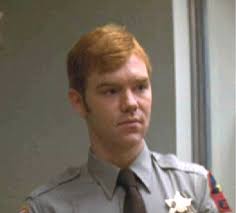
The scene fades to Rambo entering the small town of Hope, Washington State on foot, looking for a meal and possibly a hotel to spend the night. With his longish hair and military-style coat, he is quickly spotted by the town’s overzealous and paranoid sheriff, Will Teasle who quickly drives Rambo out of town, noting his strong distaste for “drifters.” A defiant Rambo heads back toward town immediately, to the dismay of Teasle who arrests him for vagrancy and for carrying a large combat knife as a concealed weapon.
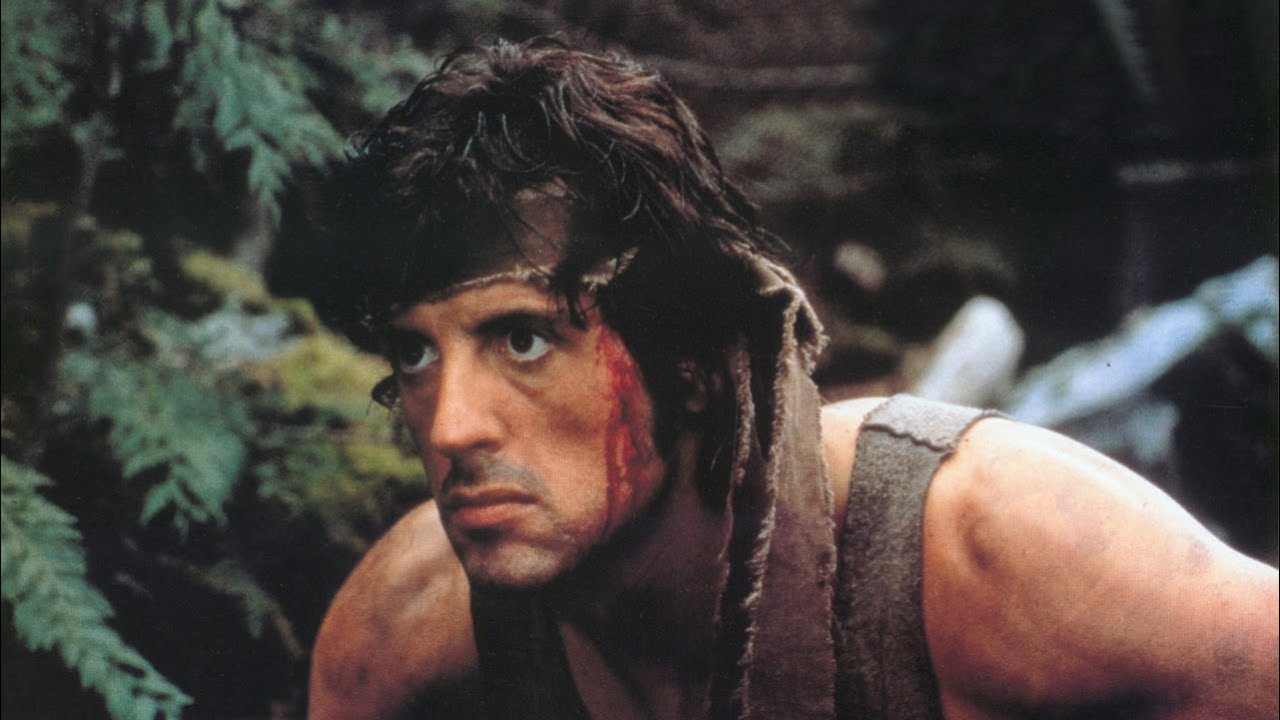
Rambo stands his ground against the officers at the station and is brutalized and harassed by Art Galt, the sheriff’s cruel head deputy and closest friend. Rambo is ordered to strip and Galt and his deputies, Ward and Mitch are astonished to see his chest and back are covered with horrible scars. Galt viciously hits Rambo in the lower back with his police baton without provocation. A third officer sprays him with a fire hose to clean him up. When they attempt to dry-shave him with a straight razor in preparation for his court appearance, Rambo has a flashback to being tortured in a North Vietnamese POW Camp and loses control, instinctively using his military training to beat Galt and his comrades. He fights his way out of the station, retrieving his large knife. He assaults several more officers, pulls a civilian off a motorcycle, steals it, and is pursued into the nearby mountains. Teasle chases him into the wilderness but ends the pursuit when his car overturns. Further up the mountain, Rambo spills the cycle he stole and runs up past the treeline. He finds an old sheet of canvas and some wire, making a tunic for himself. He ventures further up the mountain, into the forest.
The deputies are eventually forced to search for Rambo on foot and he climbs down onto a steep cliff to elude capture. After spotting Rambo from a helicopter, Galt blatantly disregards procedure and attempts to shoot him in cold blood. Rambo drops off the cliff into a mass of trees and cornered, throws a rock at the helicopter in self-defense. The helicopter, struck by the rock thrown by Rambo and due to strong updrafting, pitches, causing Galt to fall to his death. Teasle, who did not see Galt’s attempt to kill Rambo, vows to avenge his friend’s death. After tending to a deep cut in his upper arm, Rambo attempts to surrender, he’s shot at by Teasle’s men and retreats into the woods.
Teasle leads his deputies into the rugged forest to capture or kill Rambo. The deputies are inexperienced and bicker, particularly after learning over the radio about Rambo’s combat experience, and that he’s a Green Beret and a war hero. Rambo quickly disables the small, disorganized team using non-lethal guerrilla tactics and booby traps, severely wounding all the deputies and takes one deputy’s walkie-talkie. In the chaos, Rambo, wearing heavy natural camouflage, isolates and confronts Teasle, holding his knife to the sheriff’s throat and saying, “Don’t push it or I’ll give you a war you won’t believe. Let it go…” he warns before disappearing into the woods.
A base camp is assembled near the site and the National Guard is called in. Just after the National Guard informs Rambo that he is surrounded by their forces, United States Special Forces Colonel Sam Trautman arrives, taking credit for training Rambo and telling the sheriff that Rambo has been trained to survive in harsh environments and has been taught to engage superior numbers in combat. He is surprised to find any of the deputies still alive and warns that it would be safer to let Rambo go and find him a few days after the situation has calmed down, suggesting that Rambo can be apprehended without a fight. Fueled by a mixture of scorn and pride, the hot-headed Teasle refuses to heed his advice. Knowing that Rambo had stolen a CB radio from one of his men, Teasle allows Trautman to talk to Rambo. Trautman tries to convince Rambo to give himself up, however, Rambo refuses in his response, citing his deplorable treatment by Teasle and his men. Trautman suggests that Rambo shouldn’t have fought back so harshly, to which Rambo states “They drew first blood, Sir.” Rambo switches the radio off. By the time the conversation ends, Teasle’s men have triangulated Rambo’s location on the mountain.
Rambo is eventually cornered by the National Guard troopers in a mine entrance, where he has taken refuge. The novice guardsmen fire a M-72 LAW’s rocket at him, collapsing the entrance and trapping him inside. They assume Rambo is dead. Unbeknownst to his pursuers, Rambo has escaped into the tunnels of the mine. Rambo finds some old fuel and makes an improvised torch. After wading through waist-deep water and fighting off rats, Rambo cleverly uses the flame of the torch as an indicator of air flow to find an escape to the surface.
Rambo hijacks a passing U.S. Army M135 2.5 ton cargo truck, throws out the driver, crashes through a roadblock and returns to town, crashing it into a gas station. He blocks the highway to anyone in pursuit by igniting the spilled fuel on the road, also destroying the stolen truck. Armed with an M-60 machine gun, Rambo then goes on a shooting spree in town as the residents flee. Rambo, using his experience at guerrilla tactics, takes out power transformers, blacking out part of the town. Rambo shoots up and destroys a sporting goods shop and a few other businesses in an attempt to confuse Teasle as well as identify his position before spotting him on the roof of the police station.
After shooting up the building, Rambo carefully enters the police station. Aware of Teasle’s presence on the roof, Rambo darts under the skylight to draw fire as bait to reveal his exact location. Teasle immediately fires at Rambo who notes his position and returns fire through the ceiling with the M-60, injuring him. Teasle falls through the skylight onto the floor. Rambo steps over him, prepared to kill him. Before Rambo can shoot Teasle, Colonel Trautman appears and tells him that there is no hope of escaping alive. Rambo, now surrounded by the police, rages about the horrors of war in Vietnam and the difficulties he has faced adapting to civilian life. He’s tired of being misunderstood, and how in the Army he was a war hero but back in America he could not even be trusted to work “parking cars.” He weeps as he recounts a particularly gruesome story about witnessing his friend dying by having his legs blown off by a booby-trapped shoeshine box planted by a Viet Cong child operative. Rambo then turns himself in to Trautman and is arrested. The credits roll as he and Trautman exit the police station.
Director: Ted Kotcheff
Screenplay: Sylvester Stallone, Michael Kozoll, William Sackheim









 Media studies blog